The Growing Role of DRT Lawyers and Debt Recovery Law Firms in Bank Enforcement and Borrower Defence
Aug 26, 2026
VMPL
New Delhi [India], August 26: Understanding how DRT lawyers, SARFAESI advocates and debt recovery law firms assist banks, borrowers, guarantors and businesses in enforcement proceedings before the Debts Recovery Tribunal and the Debts Recovery Appellate Tribunal.
Few areas of Indian litigation move as fast, or carry as much immediate consequence, as debt recovery. A borrower who receives a demand notice under Section 13(2) of the SARFAESI Act has sixty days before the secured creditor may take possession of the mortgaged property. A guarantor who ignores a summons from the Debts Recovery Tribunal may find a recovery certificate issued against personal assets that were never the subject of the loan. A bank that mis-serves a notice or shortens a statutory timeline may see years of enforcement effort set aside on a single procedural ground.
This is the terrain that DRT lawyers occupy. It is technical, deadline-driven, and unusually unforgiving of delay. It is also one of the busiest litigation practices in the country, because the volume of stressed assets in the Indian banking system has kept the Debts Recovery Tribunals, the Debts Recovery Appellate Tribunals and the High Courts continuously engaged with enforcement disputes.
This article examines the statutory framework within which debt recovery litigation operates, the points at which a DRT advocate becomes indispensable to a bank or a borrower, and what businesses, promoters and guarantors should understand before enforcement proceedings begin.
The Statutory Framework: Three Statutes, One Battlefield
Debt recovery litigation in India sits at the intersection of three enactments, and effective representation requires fluency in all three.
The Recovery of Debts and Bankruptcy Act, 1993 created the Debts Recovery Tribunals and the Debts Recovery Appellate Tribunals as specialised forums to relieve the civil courts of bank recovery suits. Under Section 19, a bank or financial institution institutes an Original Application before the Tribunal for recovery of debts above the prescribed threshold. Where the claim succeeds, the Tribunal issues a recovery certificate, which is executed not by the Tribunal itself but by a Recovery Officer exercising powers analogous to those of a civil court executing a decree. Orders of the Recovery Officer are appealable to the Tribunal under Section 30, and orders of the Tribunal to the Appellate Tribunal under Section 21, subject to a pre-deposit requirement.
The Securitisation and Reconstruction of Financial Assets and Enforcement of Security Interest Act, 2002 changed the balance decisively. SARFAESI permits a secured creditor to enforce security without approaching any court or tribunal at the first instance. The secured creditor issues a demand notice under Section 13(2), considers any representation made by the borrower under Section 13(3A), and on expiry of sixty days may take possession, management or sale of the secured asset under Section 13(4). Where physical possession requires assistance, the secured creditor applies under Section 14 to the District Magistrate or Chief Metropolitan Magistrate. The borrower's remedy is an application under Section 17 to the Debts Recovery Tribunal, and an appeal under Section 18 to the Appellate Tribunal.
The Insolvency and Bankruptcy Code, 2016 introduced a parallel and sometimes competing track. Where a corporate debtor is admitted into insolvency resolution, the moratorium under Section 14 of the Code halts SARFAESI enforcement. Proceedings against personal guarantors have their own route under the Code. The consequence is that a debt recovery lawyer today frequently advises on forum strategy as much as on merits, because the choice between the Tribunal, the Adjudicating Authority and negotiated settlement often determines the outcome more than any argument made at final hearing.
Section 13(2): The Point at Which Most Cases Are Won or Lost
Experienced SARFAESI lawyers consistently make the same observation to borrowers: the most valuable point of intervention is the earliest one, and it is almost always missed.
A demand notice under Section 13(2) is not merely an intimation of default. It fixes the amount claimed, records the classification of the account as a non-performing asset, describes the secured assets, and starts a sixty-day clock. Everything that follows is built on it. A borrower who instructs counsel on day fifty-five has surrendered most of the available ground; a borrower who instructs counsel on day five has a genuine range of options.
A borrower defence lawyer examining a Section 13(2) notice will typically test the classification of the account as an NPA against the applicable Reserve Bank of India directions, the computation of the amount demanded including the interest calculation and the application of penal charges, the description and valuation of the secured assets, the authority of the officer issuing the notice, service and mode of service, and whether the security interest itself was validly created and, where required, registered.
The representation under Section 13(3A) is the second critical document. The secured creditor is obliged to consider it and to communicate reasons for non-acceptance. A representation that is detailed, specific and supported by documents creates a record; a representation that is a bare denial creates nothing. Because the Tribunal will later assess whether the borrower's objections were genuinely considered, the quality of this document has consequences well beyond the sixty-day period.
Section 17: The Borrower's Principal Remedy
An application under Section 17 of the SARFAESI Act to the Debts Recovery Tribunal is the borrower's primary statutory remedy against enforcement measures, and it is where the bulk of DRT litigation for borrowers is conducted.
The application must be filed within forty-five days of the measure complained of. Timelines are strictly enforced, and applications are regularly dismissed on limitation without any examination of merits. A securitisation application lawyer will normally treat the identification of the correct starting point of limitation as the first substantive question in the matter, because it is frequently contested where multiple measures have been taken in sequence.
Grounds commonly raised in Section 17 proceedings include incorrect or premature classification of the account as a non-performing asset, non-compliance with the mandatory notice requirements, failure to consider the Section 13(3A) representation, defects in the valuation of the secured asset, irregularities in the sale process, enforcement against property exempt from SARFAESI, and enforcement disproportionate to the outstanding debt.
A recurring and important category concerns agricultural land, which is exempt from SARFAESI enforcement. Tribunals have made clear that the exemption is not established merely by the description of the land in revenue records or title documents. A borrower asserting the exemption is expected to establish actual agricultural use through particulars of cultivation, crops, irrigation and agricultural income at the relevant time. A bare assertion, unsupported by such particulars, has repeatedly failed on appeal.
An equally important point of practice concerns the limits of the Tribunal's own jurisdiction. While a Debts Recovery Tribunal may examine the validity of an order passed under Section 14 of the SARFAESI Act, it cannot prospectively restrain a District Magistrate from performing statutory functions where no Section 14 order yet exists on record. Appellate Tribunals have set aside interim orders granted on that basis, and have emphasised that any such restraint must in any event be supported by reasons.
Auction Sales and the Right of Redemption
Challenges to auction sales form one of the most active segments of SARFAESI litigation, and the law in this area has tightened considerably.
The Security Interest (Enforcement) Rules, 2002 govern the process. Rule 8 deals with possession and the issuance of sale notices; Rule 9 deals with the conduct of sale, the deposit of the purchase price and the issuance of the sale certificate. The Supreme Court has held that the payment timelines prescribed under Rule 9 are mandatory rather than directory, that a sale certificate does not cure a sale that was legally incomplete, and that a borrower's rights survive where the auction process did not comply with the prescribed timelines. For auction purchasers as much as for borrowers, Rule 9 compliance is now a determinative issue in the validity of any SARFAESI sale.
The right of redemption has also narrowed. Following the 2016 amendment to Section 13(8), the borrower's statutory right to redeem the secured asset stands extinguished at an earlier stage than under the previous regime. Borrowers who assume they may redeem at any time before registration of the sale are frequently mistaken, and a bank auction lawyer will ordinarily advise that redemption be treated as a narrow and time-bound window rather than a general safety net.
Pleading discipline matters acutely in this area. Appellate Tribunals have repeatedly refused to entertain grounds concerning sale irregularities that were never pleaded in the securitisation application before the Tribunal, and have held challenges to superseded sale notices infructuous where the actual auction was conducted under a fresh notice that was never amended into the pleadings. An auction challenge lawyer who does not plead precisely, and amend promptly, forfeits arguments that may have been decisive.
Recovery Officer Proceedings and DRAT Appeals
Once a recovery certificate issues, the matter moves to execution before a Recovery Officer, and this is a distinct practice in itself. Recovery Officer proceedings involve attachment and sale of movable and immovable property, garnishee orders, arrest and detention in prescribed circumstances, objections by third parties claiming title, and disputes over the identification and valuation of attached assets.
Third-party objections are common and frequently succeed where the creditor cannot establish that attached movables belonged to the borrower. Tribunals have held that accounting records and auditors' reports, without title documents, are insufficient to establish ownership of attached property. For a recovery proceedings lawyer, documentary title rather than financial statements is the operative evidence.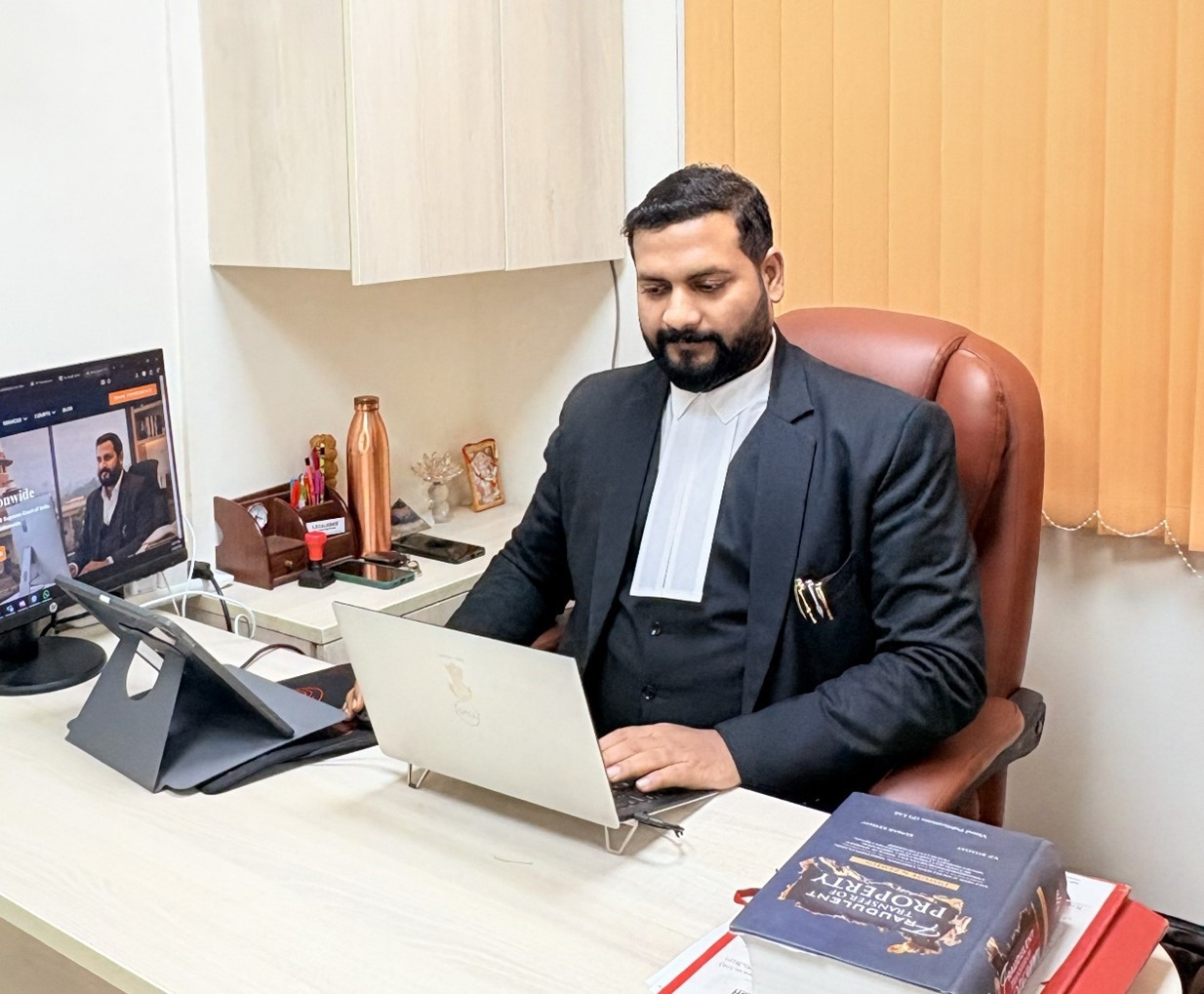
Appeals require particular attention to pre-deposit. Under Section 21 of the RDB Act, an appeal against an order of the Tribunal requires deposit of fifty per cent of the amount determined, which the Appellate Tribunal may reduce to not less than twenty-five per cent for reasons recorded. Under Section 18 of the SARFAESI Act, an appeal against an order in a securitisation application carries a comparable requirement. Appellate Tribunals have accepted that amounts already realised through auction sale may be counted towards satisfaction of the pre-deposit condition where they exceed the prescribed proportion. A DRAT appeal lawyer will usually address pre-deposit before addressing merits, because a failure at this stage ends the appeal irrespective of its strength.
Guarantors, Directors and Personal Liability
One of the most commonly underestimated exposures in debt recovery is guarantor liability.
A guarantor's liability under Indian law is co-extensive with that of the principal debtor unless the contract provides otherwise. A creditor is not obliged to exhaust remedies against the borrower or against the secured assets before proceeding against a guarantor. Promoters and directors who executed personal guarantees during the credit facility's sanction, often years earlier and without independent advice, frequently discover the extent of that exposure only when proceedings commence.
A guarantor liability lawyer will typically examine whether the guarantee was validly executed and remains in force, whether any variation of the principal contract was made without the guarantor's consent, whether the security was released or impaired in a manner discharging the guarantee, whether limitation has expired against the guarantor separately from the borrower, and whether proceedings under the Insolvency and Bankruptcy Code against the principal debtor affect the guarantor's position.
Proceedings against personal guarantors under the Code have added complexity, and the interaction between recovery before the Tribunal and insolvency before the Adjudicating Authority is now a standing feature of the practice.
Wilful Defaulter and Fraud Classification
Beyond monetary recovery, two administrative classifications carry consequences that often exceed the debt itself.
Classification as a wilful defaulter under the Reserve Bank of India's framework restricts access to institutional credit, disqualifies promoters from certain corporate roles, and carries substantial reputational consequences. The classification process requires a show-cause notice, an opportunity to represent before a committee, and a reasoned decision, and a wilful defaulter lawyer will scrutinise compliance with each of these requirements.
Classification of an account as fraud carries even more severe consequences, including reporting to regulators and investigative agencies. It is now settled that principles of natural justice apply before an account is classified as fraud, and that the borrower must be given an opportunity of hearing. Challenges on this ground are commonly brought before the High Courts under writ jurisdiction rather than before the Tribunal.
For promoters facing either classification, the response to the show-cause notice is the decisive document, and it is regularly prepared without legal input to the borrower's serious disadvantage.
Settlement, Restructuring and Bank-Side Advisory
Not every debt recovery matter is fought to conclusion, and a substantial proportion of the work of a debt recovery law firm involves negotiated outcomes.
One Time Settlement proposals are the most common route. A one time settlement lawyer advises on the timing of the proposal, its structuring against the lender's own settlement policy, the realistic assessment of security value, the treatment of guarantor liability within the settlement, and the documentation required to ensure that the settlement is final and that securities and guarantees are formally released. Settlements that are poorly documented leave guarantors exposed long after the borrower believes the matter closed.
On the creditor side, banks, non-banking financial companies and asset reconstruction companies engage bank litigation lawyers for the entire enforcement lifecycle: pre-enforcement review of documentation and security creation, drafting of notices under Sections 13(2) and 13(4), applications under Section 14, conduct of auction processes in compliance with Rules 8 and 9, institution and conduct of Original Applications, execution before Recovery Officers, and defence of securitisation applications and appeals. Given how frequently enforcement fails on procedural grounds, creditor-side advisory has increasingly moved to the documentation and notice stage rather than the litigation stage.
DRTLawyer.com, Legals365 and Advocate BK Singh
DRTLawyer.com is the dedicated debt recovery and SARFAESI practice platform of Legals365, one of India's leading law firms in banking, enforcement and tribunal litigation, serving banks, non-banking financial companies, asset reconstruction companies, corporate borrowers, MSMEs, promoters and individual guarantors across India.
The practice covers the full range of debt recovery litigation: securitisation applications under Section 17 of the SARFAESI Act before the Debts Recovery Tribunal, appeals under Section 18 before the Debts Recovery Appellate Tribunal, Original Applications under Section 19 of the RDB Act, Recovery Officer proceedings and appeals under Section 30, applications under Section 14 before the District Magistrate and Chief Metropolitan Magistrate, challenges to bank auctions and sale certificates, NPA classification disputes, wilful defaulter and fraud classification proceedings, guarantor and personal guarantor defence, One Time Settlement negotiation and documentation, and related writ proceedings before the High Courts and appeals before the Supreme Court.
Advocate BK Singh leads the debt recovery practice and is recognised among the leading DRT lawyers in Delhi, India. He appears before the Debts Recovery Tribunals and Debts Recovery Appellate Tribunals, the High Courts and the Supreme Court, and his practice extends across the wider tribunal landscape in which financial disputes arise, including the National Company Law Tribunal. This combined exposure is significant in a field where the interaction between SARFAESI enforcement, recovery proceedings and insolvency frequently determines strategy.
Legals365 operates from offices in Delhi NCR, including Vaishali, Ghaziabad and Dwarka, New Delhi, and represents clients in debt recovery matters across the country.
What Borrowers, Guarantors and Lenders Should Take Away
Several practical conclusions emerge from the current state of debt recovery litigation in India.
Engage counsel at the notice stage, not the possession stage. The single most costly decision borrowers make is to wait. Options available on receipt of a Section 13(2) notice are substantially wider than those available after possession has been taken or an auction concluded.
Limitation is decisive. The forty-five day period for a securitisation application, the periods for appeals, and the timelines governing auction sales are applied strictly. More matters are lost on limitation than on merits.
Plead completely and precisely. Grounds not raised before the Tribunal will generally not be entertained on appeal. Amend pleadings promptly when the enforcement position changes.
Budget for pre-deposit. An appeal without the statutory deposit is not an appeal. Assess this at the time the adverse order is passed, not when the appeal is being drafted.
Guarantee exposure is real and immediate. Promoters and family guarantors should obtain independent advice on their position as soon as an account shows signs of stress, and should never treat a settlement as closed without written release of guarantees.
For lenders, procedural compliance is the whole case. Enforcement that is substantively justified fails routinely on notice, valuation and sale-process defects. The cost of getting the process right at the outset is a fraction of the cost of a set-aside years later.
For consultations on SARFAESI proceedings, Debts Recovery Tribunal and Appellate Tribunal litigation, bank auction challenges, recovery proceedings and guarantor defence, DRTLawyer.com and Advocate BK Singh may be contacted through the Legals365 offices in Delhi NCR.
(ADVERTORIAL DISCLAIMER: The above press release has been provided by VMPL. ANI will not be responsible in any way for the content of the same.)